Meal planning on a budget helps families save money, reduce food waste, and enjoy stress-free dinners. Learn simple budget meal planning tips, affordable family meal ideas, and smart grocery planning in this complete guide.
Being a mom often means making dozens of decisions every single day. One of the biggest daily challenges is answering the same question:
“What’s for dinner tonight?”
When meals are not planned in advance, it’s easy to spend more money than expected. Last-minute grocery trips, food delivery, forgotten ingredients, and wasted leftovers can quickly increase your monthly food budget.
The good news is that you don’t need expensive meal kits or complicated recipes to feed your family well. Meal planning on a budget is one of the simplest ways to save money, reduce stress, and make family life much easier.
Whether you’re a first-time mom, a busy working parent, or simply trying to lower your grocery bills, this guide will help you create a practical meal planning system that actually works.
You’ll learn how to organize weekly meals, shop smarter, avoid food waste, and prepare affordable family meals without spending hours in the kitchen
- Why Busy Moms Should Start Meal Planning Today
- Smart Grocery Planning Hacks to Save Money Every Week
- Top Easy Family Meal Ideas on a Budget
- How to Prep Meals When You Have Almost No Time
- A Simple Weekly Budget Meal Planning Example
- Common Meal Planning Mistakes That Cost Families Money
- Small Habits That Save Hundreds of Dollars Each Year
- Frequently Asked Questions (FAQs)
- Final Thoughts
- Continue Reading: More Money-Saving Guides for Moms 👇
Why Busy Moms Should Start Meal Planning Today
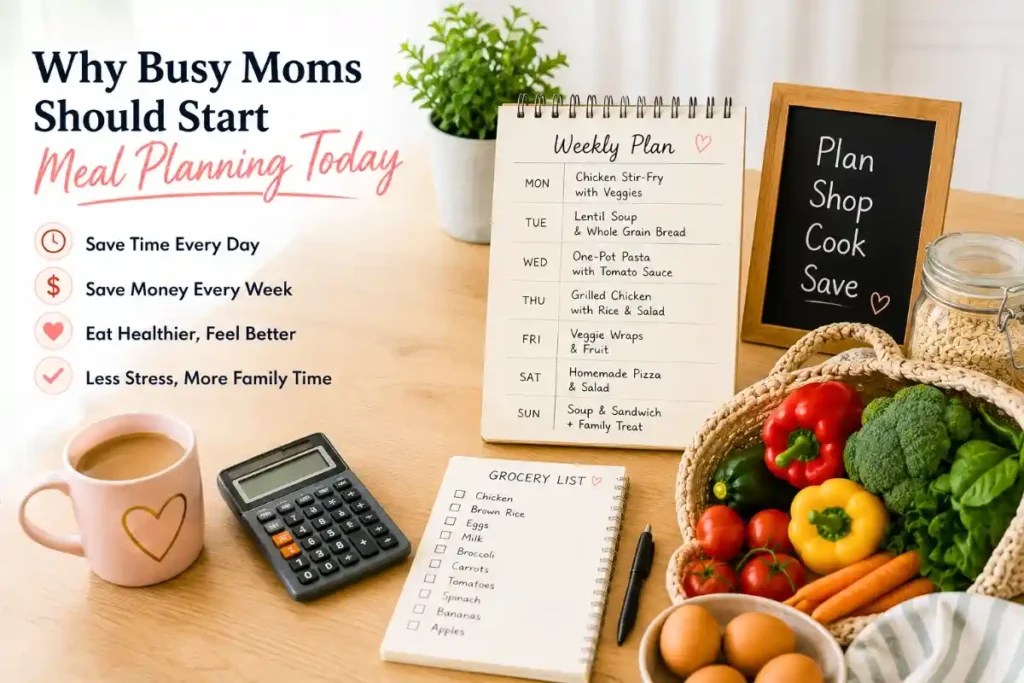
Meal planning isn’t just about deciding what to cook. It’s about creating a simple routine that saves time, protects your grocery budget, and makes everyday family life less stressful.
Many families spend hundreds of dollars every year on food they never eat. Fresh vegetables spoil in the refrigerator, leftovers are forgotten, and last-minute takeout becomes a regular habit. A simple weekly plan can prevent all of these problems.
Save Time Every Week
One of the biggest benefits of meal planning on a budget is the amount of time it saves.
Instead of standing in front of the refrigerator every evening wondering what to cook, you’ll already know what’s on the menu.
That means:
- Less time thinking about dinner
- Fewer emergency grocery trips
- Faster shopping
- Quicker cooking decisions
Even spending just 20 minutes planning meals for the week can save several hours later.
Reduce Daily Stress
Dinner should never feel like a daily emergency.
When meals are planned ahead of time, you already have the ingredients ready and know exactly what you’re cooking.
This creates a calmer evening routine for the whole family, especially after busy workdays or school activities.
Meal planning also reduces decision fatigue. Moms already make countless choices every day, so removing one daily decision can make a surprisingly big difference.
Save Money Without Feeling Restricted
Many people think saving money means buying less food.
That’s not true.
Smart grocery planning helps you buy the right food, not simply less food.
A good meal plan helps you:
- Use ingredients before they expire.
- Avoid buying duplicate items.
- Reduce expensive takeout meals.
- Make every grocery trip more efficient.
Small improvements every week can easily add up to hundreds of dollars saved each year.
Waste Less Food
Food waste is one of the biggest hidden expenses in many households.
Buying vegetables that never get cooked or leftovers that end up in the trash costs far more than most families realize.
When you build meals around ingredients you already have, almost everything gets used.
A simple habit like checking your refrigerator before shopping can immediately lower your grocery bill.
Smart Grocery Planning Hacks to Save Money Every Week
Successful budget meal planning always starts before you walk into the grocery store.
The goal isn’t simply to spend less—it’s to spend smarter.
Here are some easy grocery planning habits that can make a noticeable difference every week.
Check Your Pantry First
Before writing your grocery list, spend five minutes checking:
- Pantry shelves
- Refrigerator
- Freezer
You may already have pasta, rice, canned beans, frozen vegetables, or chicken that can become this week’s meals.
Building meals around food you already own is one of the easiest ways to lower grocery costs.
Always Shop With a Grocery List
Shopping without a list often leads to impulse purchases.
Instead, write your grocery list based on your weekly meal plan.
Organize it by sections like:
| Grocery Section | Examples |
| Produce | Apples, spinach, carrots |
| Dairy | Milk, yogurt, cheese |
| Protein | Chicken, eggs, beans |
| Pantry | Rice, pasta, oats |
| Frozen | Mixed vegetables, berries |
This simple method saves both time and money during every shopping trip.
Buy Seasonal Produce
Fresh fruits and vegetables usually cost less when they’re in season.
Seasonal produce is often:
- More affordable
- Fresher
- Better tasting
If something is expensive one week, simply choose another seasonal option instead.
Flexible meal planning helps keep grocery costs under control.
Buy Pantry Staples in Bulk
Items with a long shelf life can often be purchased in larger quantities for a lower price.
Examples include:
- Rice
- Pasta
- Flour
- Oats
- Dry beans
- Lentils
Just make sure you have proper storage space before buying larger packages.
Bulk shopping works best for products your family uses regularly.
Top Easy Family Meal Ideas on a Budget
Planning meals doesn’t mean eating the same food every day. The goal is to prepare meals that are affordable, filling, and easy to cook with ingredients you already have at home.
The ideas below are simple enough for busy weekdays while still helping your family eat healthy without overspending.
15-Minute Dinners for Hectic Nights
Some evenings are simply too busy for complicated cooking.
Keeping a few quick meal ideas ready can help you avoid expensive takeout while saving valuable time.
Here are a few family-friendly dinner ideas that can be prepared in about 15 minutes.
| Meal | Main Ingredients | Approx. Time |
| Veggie Pasta | Pasta, frozen vegetables, cheese | 15 minutes |
| Chicken Wraps | Cooked chicken, tortillas, lettuce | 15 minutes |
| Fried Rice | Leftover rice, eggs, vegetables | 15 minutes |
| Bean Quesadillas | Tortillas, beans, cheese | 10 minutes |
| Tuna Sandwiches | Bread, tuna, vegetables | 10 minutes |
These meals are perfect for nights when everyone is hungry but nobody wants to spend an hour cooking.
One-Pot Meals for Easy Cleanup
Busy moms don’t just save time while cooking—they also appreciate fewer dishes to wash afterward.
One-pot meals make dinner easier because everything cooks in the same pan or pot.
Some great examples include:
- Vegetable soup
- Chicken rice
- Lentil curry
- Chili
- Pasta with vegetables
- Bean stew
Besides reducing cleanup, these meals often create leftovers that can be used for lunch the next day.
That means less cooking tomorrow and even more savings.
Budget-Friendly Vegetarian Meals
Meat is often the most expensive part of a grocery bill.
Replacing just one or two meat-based dinners each week can lower food costs without sacrificing nutrition.
Affordable family favorites include:
- Lentil soup
- Chickpea curry
- Vegetable pasta
- Rice and beans
- Baked potatoes with vegetables
- Homemade vegetable pizza
- Black bean tacos
These meals provide protein, fiber, and essential nutrients while helping families stay within their grocery budget.
Use Leftovers in Creative Ways
Leftovers should never feel boring.
Instead of throwing away extra food, turn it into a completely different meal.
For example:
| Leftover | New Meal |
| Grilled Chicken | Chicken Wraps |
| Cooked Rice | Fried Rice |
| Roasted Vegetables | Vegetable Soup |
| Taco Meat | Loaded Baked Potatoes |
| Pasta | Pasta Bake |
Using leftovers wisely is one of the easiest ways to save money on groceries while reducing food waste.
How to Prep Meals When You Have Almost No Time

Many moms believe meal prep takes hours.
In reality, even 20–30 minutes of preparation each week can save several hours later.
The secret is preparing small tasks instead of cooking everything in advance.
Wash and Chop Vegetables Early
After grocery shopping, wash vegetables immediately.
Then chop onions, carrots, peppers, broccoli, or celery and store them in airtight containers.
When dinner time arrives, everything is already prepared.
This simple habit can reduce cooking time by almost half.
Cook Double Portions
Whenever you prepare dinner, consider making slightly more than your family needs.
Extra portions can become:
- Tomorrow’s lunch
- A freezer meal
- A quick dinner later in the week
Cooking once and eating twice is one of the smartest meal planning on a budget strategies.
Freeze Ready-to-Cook Ingredients
Some foods freeze extremely well.
Examples include:
- Cooked chicken
- Ground beef
- Chopped vegetables
- Rice
- Homemade soup
- Pasta sauce
Keeping these ingredients ready makes weeknight cooking much faster.
Create an Emergency Meal List
Every family has days when nothing goes according to plan.
Instead of ordering expensive takeout, keep a short emergency meal list.
For example:
- Peanut butter sandwiches
- Pasta with tomato sauce
- Vegetable omelet
- Frozen vegetables with rice
- Bean quesadillas
These meals require very little preparation while helping you stay on budget.
A Simple Weekly Budget Meal Planning Example
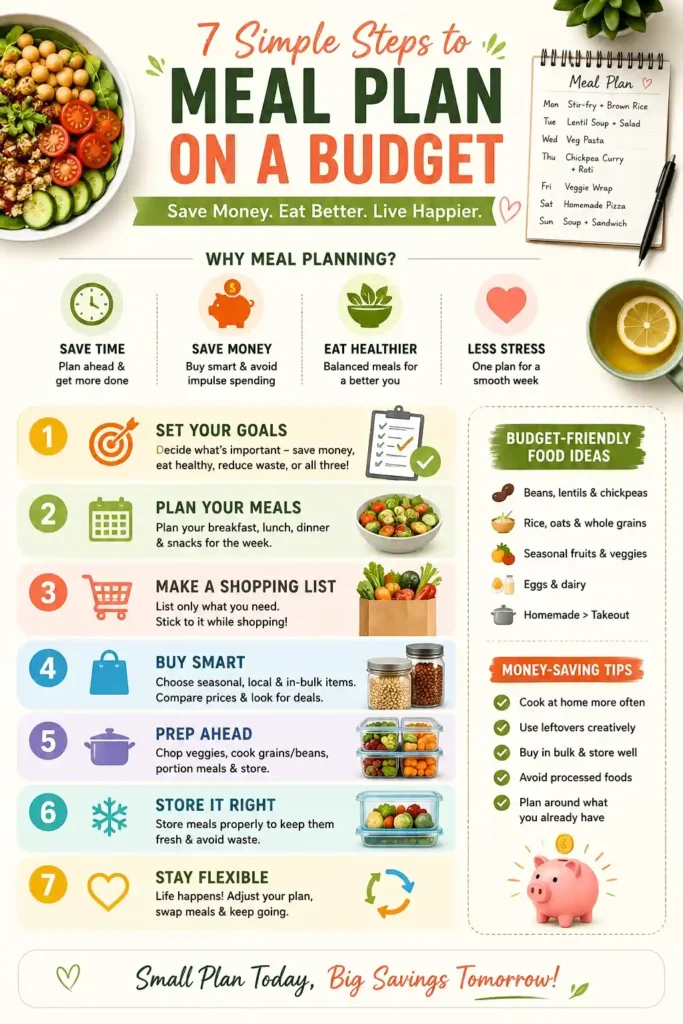
If you’re new to meal planning on a budget, you don’t need a complicated system.
Start with a simple weekly plan that balances healthy meals, affordable ingredients, and easy preparation.
Here’s an example that many busy families can easily customize.
| Day | Breakfast | Lunch | Dinner |
| Monday | Oatmeal & Fruit | Chicken Wrap | Vegetable Pasta |
| Tuesday | Yogurt & Granola | Leftover Pasta | Bean Tacos |
| Wednesday | Scrambled Eggs | Rice Bowl | Chicken Stir-Fry |
| Thursday | Peanut Butter Toast | Soup | Baked Potatoes |
| Friday | Smoothie | Leftover Chicken | Homemade Pizza |
| Saturday | Pancakes | Sandwiches | Rice & Vegetables |
| Sunday | Eggs & Toast | Salad | Family Roast Dinner |
This type of weekly plan helps you:
- Shop only once.
- Reduce food waste.
- Reuse ingredients.
- Spend less every week.
Remember, your meal plan doesn’t have to be perfect.
It only needs to work for your family’s schedule and grocery budget.
Sample Budget Grocery List
Creating a shopping list before leaving home is one of the easiest ways to control grocery spending.
Below is an example of a simple weekly grocery budget.
| Category | Estimated Budget |
| Fruits & Vegetables | $35 |
| Dairy | $20 |
| Meat & Protein | $45 |
| Pantry Staples | $30 |
| Frozen Foods | $20 |
| Snacks | $15 |
| Total | $165 |
Note: Prices are approximate and may vary depending on your location, store, and seasonal availability.
This budget is only an example.
Every family has different needs, so adjust it based on family size, dietary preferences, and local grocery prices.
Common Meal Planning Mistakes That Cost Families Money
Many families think they have a grocery budget problem.
In reality, they often have a planning problem.
Avoiding these common mistakes can save more money than using coupons alone.
Shopping Without a Plan
Going to the grocery store without deciding your meals first usually leads to buying random ingredients.
Later, many of those ingredients never get used.
Instead:
- Plan meals first.
- Write the grocery list.
- Shop once.
Buying Too Much Fresh Food
Fresh fruits and vegetables are healthy.
However, buying more than your family can eat often leads to food waste.
Buy only what you realistically need for the week.
If you’re unsure, frozen vegetables are often a better budget-friendly option because they last much longer.
Ignoring Foods Already at Home
Many families buy ingredients they already have.
Before shopping, quickly check your:
- Refrigerator
- Freezer
- Pantry
You might discover enough ingredients for two or three meals without spending anything.
Cooking Different Meals Every Day
Trying a brand-new recipe every evening usually increases grocery costs.
Many recipes require special ingredients you’ll only use once.
Instead, rotate simple family favorites.
For example:
- Taco Tuesday
- Pasta Wednesday
- Soup Thursday
- Pizza Friday
Repeating meals occasionally is one of the easiest ways to simplify budget meal planning.
Forgetting About Leftovers
Leftovers are free meals.
Unfortunately, they’re often forgotten until it’s too late.
Try creating a weekly Leftover Night where everyone finishes food already in the refrigerator.
This reduces waste and gives you one dinner that costs almost nothing.
Shopping When Hungry
This simple mistake causes many impulse purchases.
Shopping after eating makes it much easier to stick to your grocery list.
Small Habits That Save Hundreds of Dollars Each Year
Saving money doesn’t always require major lifestyle changes.
Small weekly habits often create the biggest long-term results.
Try these simple routines:
- Plan meals every Sunday.
- Keep a running grocery list.
- Freeze extra food.
- Compare unit prices instead of package prices.
- Choose store brands when quality is similar.
- Buy seasonal produce whenever possible.
- Use leftovers creatively.
- Review your grocery spending every month.
Each habit may only save a few dollars at a time.
However, together they can reduce your annual grocery costs by hundreds of dollars while making family life much easier.
Frequently Asked Questions (FAQs)
1. What is meal planning on a budget?
Meal planning on a budget means organizing your weekly meals before grocery shopping so you buy only what your family needs. It helps reduce food waste, control grocery spending, and save both time and money.
2. How do busy moms start meal planning?
Start by planning just three to five dinners for the week. Check your pantry first, create a grocery list, and prepare a few ingredients in advance. Keeping the process simple makes it easier to stay consistent.
3. How much money can meal planning save every month?
Every family is different, but many households save between $100 and $300 per month by reducing food waste, avoiding takeout, and shopping with a plan.
4. What are the best budget-friendly family meals?
Affordable family meals include:
- Vegetable pasta
- Rice and beans
- Chicken stir-fry
- Lentil soup
- Homemade pizza
- Baked potatoes
- Bean tacos
These meals are filling, nutritious, and easy to prepare.
5. Is meal planning better than grocery shopping without a list?
Yes. Shopping with a meal plan and grocery list helps you avoid impulse purchases, stick to your budget, and buy only the ingredients you’ll actually use.
6. How often should I create a meal plan?
Most families find that planning meals once a week works best. Weekly planning gives you flexibility while keeping grocery shopping organized and affordable.
7. Can meal planning help reduce food waste?
Absolutely. Meal planning encourages you to use ingredients already in your kitchen before buying more. This reduces expired food and helps you get the most value from every grocery trip.
8. What should every beginner include in a weekly meal plan?
A simple weekly meal plan should include:
- Breakfast ideas
- Lunch options
- Dinner meals
- Healthy snacks
- A complete grocery shopping list
Keeping everything in one place makes shopping and cooking much easier.
Final Thoughts
Meal planning doesn’t have to be complicated or time-consuming. Even a simple weekly plan can help your family spend less, waste less food, and enjoy stress-free dinners.
The goal isn’t perfection—it’s building a routine that works for your schedule and your budget. Start with a few meals, improve your grocery planning each week, and make small changes over time. Those small habits can lead to big savings throughout the year.
If you’re looking for an easier way to manage your food budget, meal planning on a budget is one of the smartest habits you can start today.
Continue Reading: More Money-Saving Guides for Moms 👇
Saving money is easier when you have the right strategies. Explore more practical guides designed to help moms manage household expenses, create better budgets, and make smarter financial decisions for the whole family.
• Newborn Baby Shopping List in Budget: Affordable Essentials for First-Time Moms
• How to Make a Grocery Budget: Simple Tips for Moms to Save Money
• Free Activities for Kids at Home That Cost Nothing
• Unique Money Saving Ideas for Moms
• How Moms Can Save Money with Emily Parker’s $10 Rule
• Money Saving Tips for Moms | Inspired by Real-Life Lessons
• Effortless Ways to Save Money Without Losing Your Comfort
• Money Saving Tips for Moms: How to Manage Family Finances Smartly
• My Mom’s Secret Money Management Tips That Changed Our Life Forever
💌 Don’t Lose This Helpful Guide
Found this guide useful? Save it for later or share it with another mom who might need it. ❤️
And if you’d like more practical money-saving tips, family budgeting ideas, and helpful guides, subscribe to our newsletter so you never miss a new post.
You can also follow us on LinkedIn for more helpful tips and updates.
Small changes can make a big difference—let’s save smarter together! 🌿
A Small Step Today Can Save Hundreds Tomorrow
Every meal you plan, every grocery list you follow, and every dollar you save brings you closer to a stronger family budget. Start with one simple plan this week, stay consistent, and let small habits create big results over time. Your future self—and your wallet—will thank you. 🌿💚