Learning how to make a grocery budget is one of the best ways to control family expenses. Grocery shopping is one of the biggest monthly expenses for most families. If you’re a mom, you probably know how quickly small purchases can add up. A few extra snacks, last-minute items, or unplanned trips to the store can quietly push your grocery bill far beyond what you expected.
The good news is that creating a grocery budget doesn’t mean giving up your family’s favorite foods or making life harder. It simply means having a smart plan for your money before you start shopping. With the right grocery shopping budget, you can reduce waste, avoid unnecessary spending, and still put healthy meals on the table.
In this guide, you’ll learn how to make a grocery budget step by step using simple methods that actually work in everyday life. Whether you’re creating your first monthly grocery budget, trying to build a better family grocery budget, or looking for practical grocery budgeting tips, this article will help you save money on groceries without feeling restricted.
By the end, you’ll have a clear system that is easy to follow every month—even if you’ve never budgeted before.
Quick Tip:
You don’t need to earn more money to lower your grocery bill. In many cases, having a better plan before shopping can save more than searching for expensive discounts later.
📩 Don’t Lose These Smart Money Hacks!
Don’t let this guide get lost in the noise of the internet—save it straight to your inbox before you leave!
As a mom, your time and money are precious. From smart grocery budgeting and daily household savings to stress-free family financial planning, we send practical, 100% ad-free guides to help you thrive.
Enter your email below to get our next guide delivered directly to your inbox!
What Is a Grocery Budget and Why Does It Matter?

A grocery budget is simply a plan for how much money you want to spend on groceries during a specific period, usually every week or every month. Instead of walking into the store and buying whatever looks good, you decide your spending limit before you shop.
Think of it as a roadmap for your grocery money. It helps you buy the things your family actually needs while avoiding unnecessary purchases that quietly increase your bill.
For many moms, grocery shopping isn’t just about food. It also includes household essentials like paper towels, cleaning supplies, snacks for kids, breakfast items, lunch ingredients, and sometimes even personal care products. Without a clear grocery shopping budget, these small purchases can quickly turn into a much bigger expense than expected.
The best part is that a grocery budget doesn’t mean eating less or buying cheap food. It simply helps you spend your money more wisely. When you know where every dollar is going, it becomes much easier to build a realistic monthly grocery budget that fits your family’s needs.
Why a Grocery Budget Matters
A simple grocery budget can help you:
- Spend with confidence instead of guessing.
- Reduce food waste by buying only what you’ll actually use.
- Plan meals more efficiently.
- Keep your family grocery budget under control.
- Save money every month without feeling restricted.
Over time, even small changes can make a big difference. Saving just $15–$20 each grocery trip could add up to hundreds of dollars over a year.
📌 Example
Imagine two moms with the same monthly grocery budget of $500.
Mom A – shops without a plan. She buys extra snacks, forgets ingredients, and makes multiple trips to the store. By the end of the month, she spends $620.
Mom B – creates a simple grocery budget, plans meals, and sticks to her shopping list. She finishes the month within $500 and even has money left for family treats or savings.
The difference isn’t income—it’s planning.
Quick Tip:
Your first grocery budget doesn’t have to be perfect. Start with a simple number based on what you currently spend, then adjust it little by little each month until it works for your family.
Why Every Mom Needs a Grocery Budget
For many moms, grocery shopping is not just a simple task. It is a regular responsibility that affects the family’s health, routine, and monthly finances.
From planning meals to buying food for children, managing snacks, and keeping household essentials available, moms often handle many grocery decisions every week. Without a clear plan, grocery expenses can slowly increase without anyone noticing.
A grocery budget for moms helps bring control and confidence. It allows you to decide where your money should go instead of wondering where it went at the end of the month.
Here are some important reasons why every mom should consider creating a grocery budget.
1. Reduce Unnecessary Spending
One of the biggest benefits of grocery budgeting is avoiding purchases you don’t actually need.
Many people enter a grocery store with a few planned items but leave with a cart full of extra products. Attractive offers, snacks, seasonal displays, and “just in case” purchases can increase your bill quickly.
A simple budget helps you pause and ask:
“Do I really need this item, or am I buying it because it looks interesting?
“This small habit can make a big difference in your monthly expenses.
2. Save Money Every Month
A well-planned monthly grocery budget can help you find where your money is going and where you can save.
For example, if you notice that you spend too much on packaged snacks or frequent small shopping trips, you can make small changes instead of cutting important things from your family’s meals.
Even saving $25–$50 every month through better planning can add up over time.
The goal is not to spend less on everything. The goal is to spend smarter.
3. Make Meal Planning Easier
Many grocery overspending problems happen because people shop without knowing what they will cook.
When you create a grocery budget, meal planning becomes much easier.
You can:
- Decide meals before shopping.
- Buy only the ingredients you need.
- Use the same ingredients in multiple recipes.
- Reduce last-minute food orders.
For busy moms, this saves both money and time.
4. Reduce Financial Stress
Unexpected grocery bills can create stress, especially when managing a family budget.
A clear family grocery budget gives you a better idea of your monthly expenses. You know how much money is available for food and can plan other financial goals more easily.
Whether you are saving for a vacation, building an emergency fund, or paying household bills, controlling grocery expenses can support your bigger financial goals.
5. Avoid Food Waste
Food waste is one of the hidden reasons grocery bills become higher.
Buying too many vegetables, fruits, or items without a plan often leads to unused food being thrown away.
A grocery budget encourages smarter shopping habits:
- Buy realistic quantities.
- Check what you already have at home.
- Plan meals around available ingredients.
- Use leftovers creatively.
Less waste means more savings.
Quick Tip for Moms:-
Before your next grocery trip, take 5 minutes to check your fridge, freezer, and pantry.
You may already have ingredients that can become a meal—saving you money and avoiding unnecessary shopping.
Creating a grocery budget is not about making life difficult. It is about making grocery shopping easier, more organized, and less stressful.
App simple plan can help moms save money, reduce waste, and feel more confident about their family’s finances.
How to Make a Grocery Budget (Step-by-Step Guide)
Creating a grocery budget may sound difficult at first, but it is actually much simpler than most people think.
You don’t need expensive budgeting apps or complicated spreadsheets. All you need is a little planning and the willingness to build one small habit at a time.
If you’ve never created a grocery budget before, don’t worry. Follow these simple steps, and by the end, you’ll have a grocery plan that works for your family—not against it.
Step 1: Check Your Current Grocery Spending
Before deciding how much you should spend, you need to know how much you’re already spending.
Many families underestimate their grocery expenses because they only remember their biggest shopping trips. In reality, small purchases made throughout the month—like milk, bread, snacks, drinks, or quick supermarket visits—also count.
Take a look at your:
- Bank statements
- Credit card history
- Grocery store receipts
- Shopping apps
- Budget tracker (if you already use one)
Try to calculate how much you spent on groceries during the last one or two months.
Don’t worry if the number is higher than expected. This step isn’t about judging your spending—it’s about understanding it.
Once you know your average monthly grocery cost, you’ll have a much better starting point for building a realistic monthly grocery budget.
📌 Example:
Imagine your grocery spending looked like this:
| Week | Grocery Spending |
| Week 1 | $95 |
| Week 2 | $120 |
| Week 3 | $88 |
| Week 4 | $107 |
| Total Monthly Grocery Spending | $410 |
Now you know where you’re starting instead of making random guesses.
💡Quick Tip:
If you don’t have old receipts, spend one month tracking every grocery purchase. Even writing each expense in your phone’s Notes app is enough to reveal spending habits you may never have noticed before.
Step 2: Decide Your Monthly Grocery Budget
Once you know your current grocery spending, the next step is to choose a budget that feels realistic.
This is one of the biggest mistakes people make—they try to cut their grocery expenses too much, too quickly.
For example, if your family normally spends around $500 per month, suddenly trying to live on $250 will probably lead to frustration. You’ll feel restricted, make extra shopping trips, or eventually give up on budgeting altogether.
Instead, reduce your budget gradually.
For example:
- Current spending: $500
- New grocery budget: $450
- Goal after a few months: $420–$400
Small improvements are much easier to maintain than extreme changes.
Remember, a good family grocery budget should fit your lifestyle, family size, eating habits, and financial goals.
📌 Things That Affect Your Grocery Budget
Every family’s grocery expenses are different. Your budget may depend on:
- Family size
- Children’s age
- Dietary needs
- Home cooking vs eating out
- Local grocery prices
- Seasonal food costs
Avoid comparing your grocery budget with someone else’s. The goal is to improve your spending—not copy another family’s numbers.
💡Quick Tip:
Choose a grocery budget that you can realistically follow for the next three months.
A budget that works consistently is much better than a “perfect” budget that only lasts one week.
✅ Mini Summary:
Before you try to save money on groceries, understand where your money is already going.
Then set a realistic budget that helps you improve month after month instead of expecting perfect results overnight.
Step 3: Plan Your Meals Before Shopping
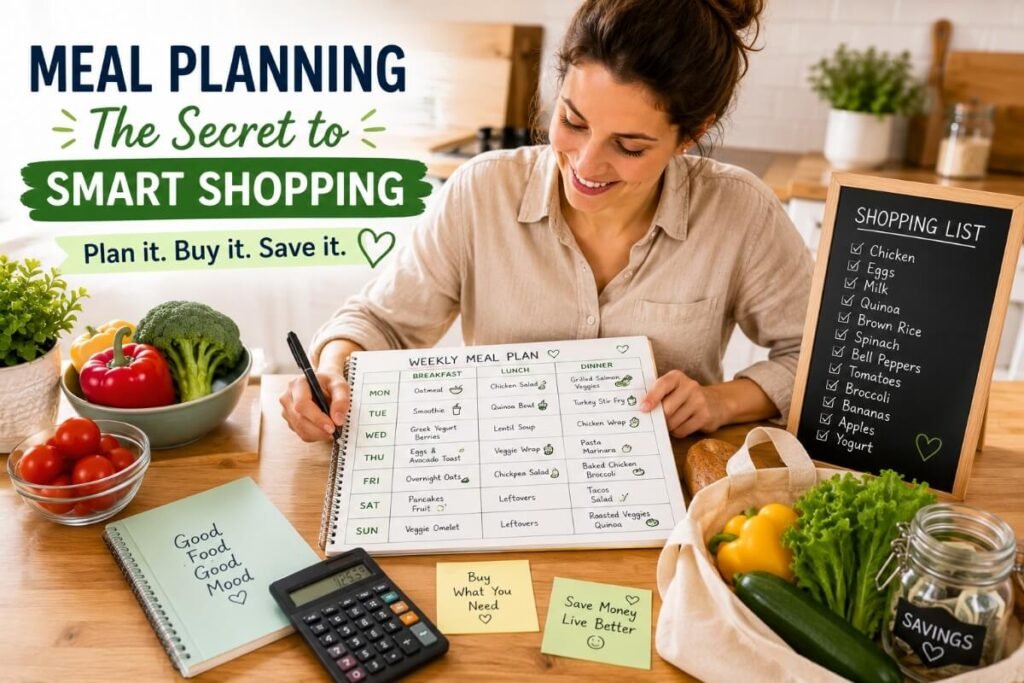
One of the easiest ways to control your grocery budget is to decide what you’ll cook before you go shopping.
Many people shop first and think about meals later. This often leads to buying random ingredients that don’t work well together. As a result, food gets wasted, important items are forgotten, and another grocery trip becomes necessary.
Meal planning changes this completely.
Instead of asking yourself, “What should I cook today?” every evening, you’ll already have a simple plan for the week.
Start by planning breakfast, lunch, dinner, and a few snacks. You don’t need fancy recipes. Even simple meals work well if they’re planned in advance.
For example:
| Day | Dinner Plan |
| Monday | Grilled Chicken with Rice |
| Tuesday | Vegetable Pasta |
| Wednesday | Homemade Tacos |
| Thursday | Chicken Salad |
| Friday | Stir-Fried Vegetables & Rice |
| Saturday | Soup and Sandwiches |
| Sunday | Leftover Meal Night |
Notice something important?
Some ingredients appear more than once.
That’s exactly what smart grocery budgeting looks like.
Buying ingredients that can be used in multiple meals helps reduce waste and keeps your grocery shopping budget under control.
For example, if you buy spinach for Monday’s salad, you can also use it in Tuesday’s pasta or Wednesday’s omelet instead of letting it spoil in the refrigerator.
This small habit alone can save a surprising amount of money over a month.
📌 Meal Planning Doesn’t Have to Be Perfect
Many moms think they need to plan every single meal in detail.
You don’t.
Even planning 4–5 dinners each week is enough to make grocery shopping much easier.
Leave some flexibility for leftovers, quick meals, or family outings.
The goal is progress—not perfection.
💡Money Saving Hack
Before creating next week’s meal plan, check your refrigerator, freezer, and pantry.
Ask yourself:
- What vegetables need to be used first?
- Do I already have rice or pasta?
- Is there frozen meat that can become tomorrow’s dinner?
Planning meals around food you already own helps you save money on groceries while reducing food waste at the same time.
✅ Mini Summary
Meal planning is one of the most powerful grocery budgeting tips because it helps you:
- Buy only what you need.
- Reduce food waste.
- Spend less on unnecessary items.
- Make cooking less stressful during busy weekdays.
Step 4: Create a Grocery Shopping List
Once your meals are planned, the next step is creating a shopping list.
This sounds simple, but it is one of the biggest reasons successful families stay within their monthly grocery budget.
Walking into a grocery store without a list is like going on a road trip without a destination.
You’ll probably buy things that look good in the moment, forget the items you actually needed, and end up spending much more than expected.
A shopping list keeps you focused.
Instead of reacting to colorful displays and limited-time offers, you’ll already know exactly what belongs in your cart.
The easiest way is to divide your list into categories.
Example: Grocery Shopping List
🥦 Fruits & Vegetables
- Apples
- Bananas
- Carrots
- Spinach
- Tomatoes
🥛 Dairy
- Milk
- Cheese
- Yogurt
🥩 Protein
- Chicken Breast
- Eggs
- Ground Turkey
🍞 Pantry
- Rice
- Pasta
- Bread
- Peanut Butter
🧴Household Items
- Dish Soap
- Paper Towels
- Trash Bags
Grouping items this way saves time while shopping because you’re not walking back and forth across the store.
It also makes it easier to notice if you’ve added something that wasn’t part of your original plan.
📌 The 24-Hour Rule
If you suddenly feel like buying something that isn’t on your list, don’t put it in your cart immediately.
Instead, ask yourself:
“Would I still want this tomorrow?
“If the answer is yes, you can always buy it during your next shopping trip.
Most impulse purchases disappear after just a few hours.
💡Quick Tip:
Keep a shared grocery list on your phone.
Whenever someone in your family finishes milk, cereal, eggs, or bread, they can add it immediately.
This simple habit prevents forgotten items and unnecessary extra trips to the store.
✅ Mini Summary
A grocery shopping list isn’t just a reminder.
It’s one of the easiest ways to protect your family grocery budget, avoid impulse buying, and make every shopping trip faster and more organized.
Step 5: Compare Prices and Use Discounts Wisely
Saving money on groceries doesn’t always mean buying the cheapest products.
The real goal is getting the best value for your money.
Many shoppers make the mistake of choosing an item simply because it has a discount sticker. However, a product on sale isn’t always the better deal.
Before adding something to your cart, take a few extra seconds to compare:
- Price
- Quantity
- Brand
- Quality
- Cost per unit
For example:
| Product | Size | Price | Better Value |
| Rice A | 2 kg | $8 | ❌ |
| Rice B | 5 kg | $17 | ✅ Lower cost per kg |
Although Rice B costs more at checkout, each kilogram is actually cheaper. If your family uses rice regularly, buying the larger pack can reduce your long-term grocery costs.
Don’t Buy Something Just Because It’s on Sale
Many stores use discounts to encourage impulse purchases.
Imagine you planned to spend $4 on cereal.
You see a different cereal with a “Buy 2, Save $3” offer.
It sounds like a great deal.
But if your family doesn’t even like that cereal—or you didn’t need two boxes—you haven’t saved money.
You’ve simply spent more.
A good rule is:
A discount only saves money if you were already planning to buy that item.
Compare Store Brands
Store-brand products are often made in the same factories as popular brands but sold at a lower price.
Many moms save hundreds of dollars each year simply by switching from branded pantry items to store-brand alternatives.
Good products to compare include:
- Pasta
- Rice
- Flour
- Sugar
- Canned vegetables
- Frozen vegetables
- Oats
- Paper products
- Cleaning supplies
Try one product at a time.
If your family likes it, you’ve found an easy way to reduce your grocery bill without changing your meals.
Use Coupons Carefully
Coupons can be helpful—but only when used correctly.
Don’t let a coupon convince you to buy something you never intended to purchase.
Instead, use coupons for products that are already on your shopping list.
The best savings happen when:
- The item is already on sale.
- You have a coupon.
- You actually need the product.
That combination can significantly lower your grocery expenses.
Shop at the Right Time
Some grocery stores reduce prices on:
- Fresh bread in the evening.
- Meat before the sell-by date.
- Seasonal fruits and vegetables.
- Holiday products after major events.
Learning your local store’s pricing patterns can help you save money without changing what you buy.
💡Smart Shopping Tip:
If you regularly buy the same grocery items every month, keep a small notebook (or phone note) of their normal prices.
This makes it much easier to recognize whether a discount is actually a bargain or just clever marketing.
✅ Mini Summary
Comparing prices doesn’t mean buying the cheapest option every time.
It means making informed decisions that give your family the most value while keeping your grocery shopping budget under control.
Step 6: Track Every Grocery Expense
Creating a grocery budget is only the first half of the process.
The second half is making sure you actually follow it.
That’s why tracking your grocery expenses is so important.
Many people create a budget at the beginning of the month but never check whether they’re staying within it.
By the end of the month, they wonder why their grocery spending was much higher than expected.
Tracking solves this problem.
Record Every Grocery Purchase
Every time you buy groceries, write down:
- Date
- Store name
- Amount spent
That’s it.
You don’t need complicated budgeting software.
You can use:
- Notes app on your phone
- Google Sheets
- Excel
- A budgeting app
- A small notebook
Whatever system you’ll actually use consistently is the best one.
Example: Grocery Expense Tracker
| Date | Store | Amount |
| July 3 | Walmart | $82 |
| July 8 | Costco | $124 |
| July 14 | Aldi | $56 |
| July 22 | Target | $39 |
Monthly Grocery Budget: $350
Current Spending: $301
Remaining Budget: $49
A simple tracker like this lets you know exactly where you stand before your next shopping trip.
Review Your Spending Every Week
Instead of waiting until the end of the month, spend five minutes every weekend reviewing your grocery expenses.
Ask yourself:
- Did I buy anything unnecessary?
- Which items cost more than expected?
- Did I waste any food this week?
- Can I reduce next week’s spending without affecting meal quality?
These small weekly reviews make budgeting much easier than trying to remember everything at the end of the month.
Don’t Aim for Perfection
Some weeks will cost more.
Birthdays, holidays, school events, or unexpected guests can increase grocery spending.
That’s completely normal.
The goal isn’t to create a perfect grocery budget.
The goal is to understand your spending and improve it little by little.
If you go over budget one week, don’t give up.
Simply adjust your spending next week.
Budgeting is a long-term habit—not a one-time challenge.
💡Easy Habit That Works:
After every grocery trip, save your receipt for one minute.
Before throwing it away, record the total amount in your expense tracker.
This tiny habit takes less than 30 seconds but gives you complete control over your grocery spending throughout the month.
✅ Mini Summary
Tracking your grocery expenses helps you:
- Stay within your monthly grocery budget.
- Spot unnecessary spending.
- Build better shopping habits.
- Make smarter decisions every month.
- Feel more confident about your family’s finances.
Remember, a grocery budget only works when you know where your money is actually going.
Grocery Budget Example for Moms
Sometimes it’s easier to understand a budget when you can actually see one.
The example below isn’t a perfect budget for every family because grocery costs vary depending on where you live, your family size, and your eating habits. Instead, think of it as a simple starting point that you can adjust based on your own needs.
If you’re creating your first family grocery budget, don’t worry about making it perfect. The goal is to organize your spending into categories so you know where your money is going.
Example Monthly Grocery Budget
| Category | Monthly Budget |
| Fruits & Vegetables | $80 |
| Dairy Products | $40 |
| Meat & Protein | $90 |
| Grains & Pantry Items | $50 |
| Snacks | $30 |
| Household Essentials | $40 |
| Total | $330 |
This is just an example. Your numbers may be higher or lower, and that’s completely okay.
For example:
- A family with two children may need a larger grocery budget than a single parent with one child.
- Families who cook at home every day may spend more on groceries but less on restaurant meals.
- If someone in your family follows a special diet, your grocery expenses may naturally be higher.
The important thing isn’t copying someone else’s budget—it’s creating one that works for your own household.
How to Adjust This Budget
After tracking your grocery spending for one month, compare it with your budget.
Ask yourself:
- Which category went over budget?
- Which category stayed under budget?
- Did I buy something I didn’t actually need?
- Which foods were wasted?
For example, if you planned to spend $30 on snacks but ended up spending $55, that’s a good sign to review your shopping habits next month.
On the other hand, if you only spent $65 on fruits and vegetables instead of $80, you might move those extra dollars to another category.
Remember, your grocery budget should grow and improve with experience.
💡Budgeting Tip:
Instead of trying to cut every category, focus on the one where you overspend the most.
Small improvements in one category are often easier to maintain than making drastic changes everywhere at once.
Mini Review
A grocery budget is not about limiting your family.
It’s about giving every dollar a purpose before you spend it.
Once you know where your money goes, making better financial decisions becomes much easier.
10 Simple Tips to Save Money on Groceries

Creating a budget is a great first step, but your daily shopping habits are what make the biggest difference over time.
The following tips are simple, practical, and easy to apply—even if you’ve never followed a grocery budget before.
1. Buy Seasonal Fruits and Vegetables
Seasonal produce is usually fresher, tastes better, and costs less because it’s widely available.
Instead of buying expensive out-of-season fruits, choose what’s currently in season to reduce your grocery bill.
2. Never Shop When You’re Hungry
This might sound funny, but it’s backed by research.
Shopping on an empty stomach often leads to impulse purchases, especially snacks, sweets, and ready-to-eat foods.
Having a small meal before grocery shopping can actually help you spend less.
3. Stick to Your Shopping List
Your shopping list should be your guide—not just a suggestion.
Every extra item you add without planning increases the chances of going over your grocery budget.
If something isn’t on your list, pause for a moment before putting it in your cart.
Ask yourself if it’s truly necessary.
4. Choose Store Brands When Possible
Many store-brand products offer similar quality at a lower price.
Start by trying one or two products instead of replacing everything at once.
If your family likes them, you’ve found an easy way to save money every month.
5. Cook More Meals at Home
Restaurant meals and food delivery are convenient, but they usually cost much more than home-cooked meals.
Preparing simple meals at home a few extra times each week can significantly reduce your monthly food expenses while giving you better control over ingredients.
6. Freeze Extra Food Instead of Throwing It Away
One of the easiest ways to save money on groceries is to use your freezer more effectively.
Many families throw away fruits, vegetables, bread, cooked meals, or leftover ingredients simply because they weren’t used in time.
Instead of letting food spoil, freeze it for later.
Items that freeze well include:
- Bread
- Cooked rice
- Chicken
- Ground meat
- Vegetables
- Homemade soup
- Pasta sauce
- Cheese (many varieties)
- Fresh herbs
For example, if you cooked too much chicken for dinner, freeze the extra portion. It can become tomorrow’s salad, wrap, or sandwich instead of ending up in the trash.
Small habits like this help reduce food waste while lowering your grocery expenses.
7. Avoid Impulse Buying
Impulse buying is one of the biggest reasons grocery budgets fail.
Stores are designed to encourage unplanned purchases.
You’ll often find:
- Candy near checkout
- Special offers at aisle ends
- Colorful seasonal displays
- “Limited-time” discounts
Before placing anything extra in your cart, ask yourself two simple questions:
• Do I actually need this?
• Was this already on my shopping list?
If the answer is “no,” consider leaving it behind.
One small impulse purchase may not seem expensive, but several of them every week can easily add hundreds of dollars to your annual grocery spending.
8. Compare Unit Prices Instead of Package Prices
Many shoppers only compare the price printed on the shelf.
Smart shoppers compare the unit price.
For example:
| Product | Package Price | Unit Price |
| Peanut Butter (500 g) | $4.50 | $0.90 per 100 g |
| Peanut Butter (1 kg) | $7.50 | $0.75 per 100 g |
Although the larger jar costs more today, each 100 grams is cheaper.
Most grocery stores already display the unit price on the shelf label.
Checking it takes only a few seconds but helps you make smarter buying decisions.
9. Review Your Grocery Budget Every Month
Your grocery budget shouldn’t stay exactly the same forever.
Food prices change.
Your family grows.
Children eat more.
Seasons change.
That’s why it’s a good idea to review your monthly grocery budget once every month.
Ask yourself:
- Which category stayed within budget?
- Which category went over budget?
- What caused the extra spending?
- Which habits helped me save money?
These monthly reviews help you improve your grocery budget little by little instead of making big changes all at once.
10. Focus on Progress, Not Perfection
No grocery budget is perfect.
Some months you’ll spend more because of holidays, birthdays, family gatherings, or unexpected guests.
That’s completely normal.
Don’t quit your budget because one shopping trip went over your limit.
Instead, learn from it.
Budgeting is about building better habits—not being perfect every single week.
Even if you save just 5–10% on groceries every month, that money can be used for:
- Emergency savings
- Children’s education
- Family vacations
- Paying off debt
- Investing for the future
Small improvements create big results over time.
Common Grocery Budget Mistakes
Even with a good plan, it’s easy to make small mistakes that slowly increase grocery spending.
Knowing these mistakes can help you avoid them before they affect your budget.
Shopping Without a List
Going to the grocery store without a list usually leads to forgotten essentials and unnecessary purchases.
A simple shopping list keeps you focused and prevents extra spending.
Ignoring Weekly Offers
Weekly discounts can help you save money—but only if they’re for products you already planned to buy.
Always check your local grocery store’s weekly flyer before shopping.
Buying Too Much Fresh Food
Fresh fruits and vegetables are healthy, but buying more than your family can eat often leads to waste.
Purchase realistic amounts and restock later if needed.
Forgetting to Track Expenses
Many people create a grocery budget but never record what they spend.
Without tracking, it’s impossible to know whether your budget is actually working.
Wasting Leftovers
Leftovers are money you’ve already spent.
Use them for lunch, freeze them for another day, or include them in your next meal plan.
Reducing food waste is one of the easiest ways to lower grocery costs.
Final Thoughts
Learning how to make a grocery budget doesn’t require complicated math or expensive budgeting tools.
It starts with a few simple habits:
- Know how much you’re spending.
- Plan your meals.
- Shop with a list.
- Compare prices carefully
- Track every grocery expense.
- Review your budget regularly.
Remember, the purpose of a grocery budget isn’t to stop enjoying good food.
It’s to make sure every dollar you spend brings value to your family.
Start with a simple budget, adjust it as you learn, and don’t worry about getting everything perfect on your first attempt.
Small, consistent improvements can lead to significant savings over time.
By following these grocery budgeting tips, you’ll not only save money on groceries but also build healthier financial habits that benefit your entire family.
Frequently Asked Questions (FAQs)
1. How do I make a grocery budget for the first time?
If you’re creating your first grocery budget, start by checking how much you’ve spent on groceries over the last one or two months. Set a realistic monthly limit, plan your meals in advance, create a shopping list, and track every purchase. Don’t worry about making it perfect in the beginning. Your grocery budget will improve as you learn your family’s shopping habits.
2. How much should a family spend on groceries every month?
There isn’t one perfect number because every family is different. Your monthly grocery budget depends on family size, income, location, and eating habits. Instead of copying someone else’s budget, calculate your average grocery spending and create a budget that fits your household. The best grocery budget is one you can follow consistently.
3. What is the best grocery budgeting method?
The best grocery budgeting method is the one you’ll actually stick to. Many moms find success by planning meals for the week, shopping with a list, comparing prices, and tracking every grocery expense. Using cash envelopes or budgeting apps can also help you stay within your grocery shopping budget.
4. How can moms save money on groceries every month?
Moms can save money on groceries by planning meals before shopping, buying seasonal produce, choosing store-brand products, avoiding impulse purchases, freezing extra food, and tracking monthly grocery expenses. Small changes like these can reduce grocery costs without affecting the quality of family meals.
5. What percentage of income should go toward groceries?
There isn’t a fixed percentage that works for everyone. A healthy grocery budget should fit comfortably within your overall household budget while leaving enough money for housing, transportation, savings, and other essentials. If grocery costs are becoming too high, reviewing your shopping habits is often more effective than simply cutting your food budget.
6. How do I stop overspending on groceries?
The easiest way to stop overspending is to shop with a grocery list, avoid shopping when you’re hungry, compare prices before buying, and track every purchase. Reviewing your grocery spending each week can also help you identify habits that increase your monthly food budget.
7. Should I meal plan before grocery shopping?
Yes. Meal planning is one of the easiest ways to reduce food waste and stay within your grocery budget. When you know exactly what you’ll cook during the week, you’re less likely to buy unnecessary items or forget important ingredients. This also makes grocery shopping faster and more organized.
8. Is buying in bulk always cheaper?
Not always. Buying in bulk only saves money if you will actually use the product before it expires. Compare the unit price instead of just the package price. Large packages are often cheaper per pound or kilogram, but they aren’t a good deal if food ends up being wasted.
9. What are the biggest grocery budgeting mistakes?
Common grocery budgeting mistakes include shopping without a list, buying too many sale items, ignoring unit prices, wasting leftovers, forgetting to track expenses, and making impulse purchases. Avoiding these habits can make your grocery budget much more effective.
10. What’s the easiest way to track grocery spending?
The easiest way is to record every grocery purchase in a notes app, spreadsheet, budgeting app, or small notebook. Simply writing down the date, store, and amount spent after each shopping trip helps you stay aware of your monthly grocery budget and avoid overspending.
Conclusion
Creating a grocery budget doesn’t mean giving up the foods your family loves. It simply means spending with a plan instead of guessing every time you shop.
Whether you’re trying to reduce monthly expenses, build better financial habits, or simply make your paycheck last longer, a simple grocery budget can make a big difference over time.
Start small, stay consistent, and remember that every smart shopping decision helps you move closer to your financial goals.
📚 Continue Reading: More Money Saving Guides for Moms 👇
- Money Saving Tips for Moms: How to Manage Family Finances Smartly
- My Mom’s Secret Money Management Tips That Changed Our Life Forever
- Money Saving Tips for Moms | Inspired by Real-Life Lessons
- How Moms Can Save Money with Emily Parker’s $10 Rule
- Effortless Ways to Save Money Without Losing Your Comfort
- Free Activities for Kids at Home That Cost Nothing
- Unique Money Saving Ideas for Moms
I hope this grocery budgeting guide helps you make smarter shopping decisions and save more money for your family.
Remember, saving money doesn’t happen through one big change. Small habits like planning meals, creating a shopping list, and tracking your expenses can create a big difference over time.
Keep exploring our money-saving guides for moms and start building simple habits that make your family’s budget easier to manage.