Last month I knelt on my bathroom floor with the cabinet doors wide open. I was only looking for a spare toothbrush. What I found was three half-empty bottles of baby lotion, two hair masks I swore I’d use “next week,” and a body wash I bought on sale in 2023. In the kitchen it got worse. I had four cans of black beans, two open bags of pasta, and a freezer full of mystery vegetables.
I added it up in my head. Easily $200 of stuff was sitting in my house, and I was about to go buy more of it. That’s the moment I found Project Pan, and it changed how I shop.
What is Project Pan? The original project pan meaning comes from the beauty community—referring to hitting the metal ‘pan’ at the bottom of a makeup compact. Today, budget-savvy moms have turned it into a viral money-saving challenge where you commit to using up every single household, skincare, and pantry item you already own before buying a single replacement.
How “Underconsumption Core” Turned Project Pan Into a Mom Superpower
You might have seen the “restock” videos online. Perfect rows of matching bottles, labeled baskets, and a fridge that looks like a store display. They look nice, but they also make you feel like your normal, messy home isn’t good enough.
Lately, moms across the US and Europe have started pushing back. The trend is called underconsumption core. The idea is simple: use what you have, buy less, and be proud of a lived-in home. Nobody is judging your half-used shampoo. Finishing it is the goal.
This matters because small purchases add up quietly. Think about a normal restock run at Target, Walmart, or your local supermarket. You go in for diapers and come out with a new face wash, a pack of sponges, and a fancy olive oil.
Here is the math for a typical family:
- A weekly “extras” run (cleaning supplies, skincare, snacks, pantry items) costs about $35 to $50.
- Over 60 days, that’s roughly 8 or 9 trips.
- 8 trips × $35 = $280. 9 trips × $50 = $450.
So if you skip those routine restock runs for 60 days, you keep about $300 to $450 in your bank account. That’s a few months of car insurance, or a nice start on an emergency fund. And you didn’t give up anything you needed, because the products were already in your house.
How to Do a Household Project Pan Challenge (4 Simple Steps)
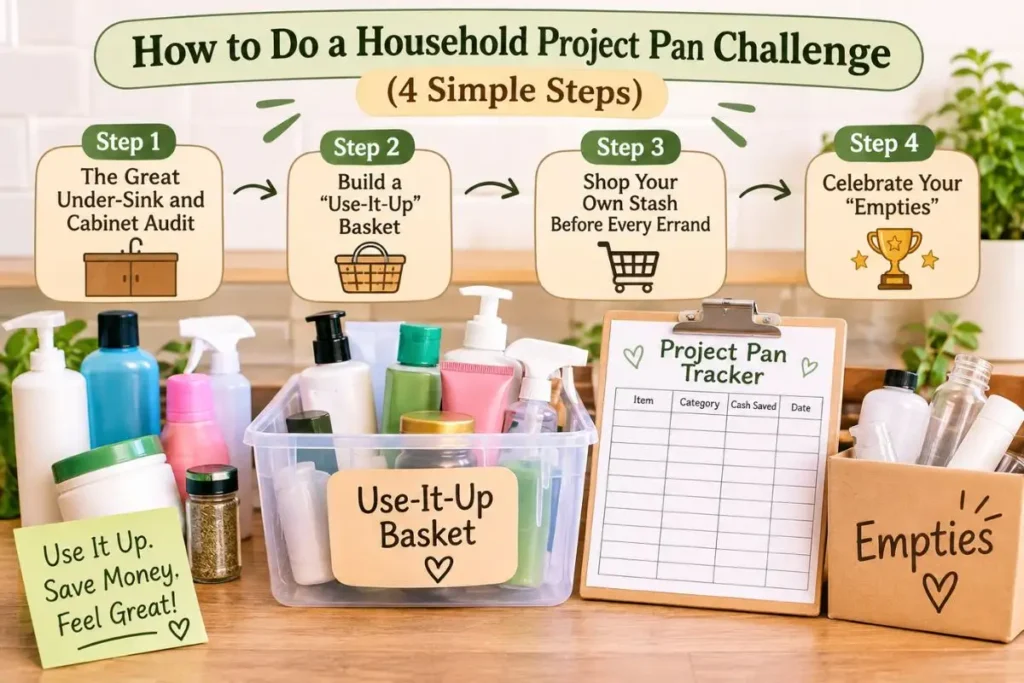
You don’t need special tools. You need a free afternoon, a clear bin, and a little patience. Here is the exact way I do it.
Step 1: The Great Under-Sink and Cabinet Audit
Pull everything out onto the floor. I mean everything. Half-used shampoos, kids’ bubble baths, multi-surface sprays, and those duplicate spices you bought because you couldn’t find the first jar.
Sort it into three piles: use now, use later, and toss (expired or dried out). Be honest. If a product is old and unsafe, let it go. Most families are shocked at how big the “use now” pile is.
Step 2: Build a “Use-It-Up” Basket
Take every open product and put it in one clear bin on the counter. Clear matters because you can see what’s low.
The rule is simple: the family reaches for the bin first. Nobody opens a new bottle until the bin is empty. My kids actually like this part. They treat it like a game and cheer when a bottle runs out.
Step 3: Shop Your Own Stash Before Every Errand
Before you write any shopping list, check your closets, freezer, and drawers first. Make it a house rule, not a suggestion.
You’ll be surprised how often “we’re out of tomato sauce” really means “it’s behind the rice.” Five minutes of checking can save you $20 on a single trip.
Step 4: Celebrate Your “Empties”
Keep a small box for finished bottles and containers during the month. When one is empty, drop it in the box.
At the end of the month, you can see your progress. Seeing a box full of empties feels great, and you can add up what you would have spent replacing each one. That brings us to the tracker.
Using a Project Pan Spreadsheet Template to Track Your Savings
A project pan spreadsheet template is the easiest way to stay motivated. When you write down every empty and see the dollar amount grow, the challenge becomes a little addictive in a good way.
You don’t need fancy software. Google Sheets, Excel, or even a simple notebook works. Just make four columns, like this:
| Item Name | Room/Category | Replacement Cost Saved | Date Finished |
| Baby lotion (16 oz) | Bathroom | $8.49 | March 4 |
| Laundry detergent (last 20 oz) | Laundry | $6.99 | March 9 |
| Box of crayons (finished set) | Kids’ Craft Supplies | $3.25 | March 12 |
| Canned black beans (2 cans) | Kitchen Pantry | $2.40 | March 15 |
At the bottom, add a “Total Saved” cell. In Google Sheets or Excel, you can type =SUM(C2:C50) and it adds up your savings automatically. If you use a notebook, just add it up at the end of each week.
Here is a tip that helped me. Write the price of what it would cost to replace the item, not what you paid. That is the real money you are keeping in your pocket.
Best Areas for a Mom’s Project Pan
Not sure where to start? These four spots usually hold the most hidden savings.
- Bathroom and Skincare. This is the graveyard of half-used lotions, sample-size hotel toiletries, and hair masks. Finish these before you buy anything trendy. Use the tiny hotel shampoos for gym bags and weekend trips.
- Kids’ Craft Supplies and Gear. Plan a creative afternoon using up broken crayons, half-filled notebooks, and leftover party favors. Do this before you buy any new school or craft supplies. Melted crayon art is a surprisingly fun rainy-day project.
- Kitchen Pantry and Deep Freezer. Try “pantry clean-out dinners.” Cook with random cans of beans, half-open pasta bags, and frozen veggies. A pot of pasta with beans and veggies is cheap, filling, and kid-approved at my house.
- Laundry and Cleaning Supplies. Finish the last few ounces of different laundry detergents and floor cleaners before you open a fresh jug. (Never mix different cleaning chemicals together, though. Use up one product at a time.)
Frequently Asked Questions About Project Pan
What is Project Pan in simple words?
It’s a challenge where you use up what you already own before buying new things. It started with makeup and now includes skincare, cleaning supplies, and food.
What is the project pan meaning?
“Pan” is the metal dish at the bottom of a makeup compact. When you “hit pan,” you have used up the product completely. The term now means finishing things all the way.
How long should a Project Pan challenge last?
Most people do 30, 60, or 90 days. If you’re new, start with 30 days. If you want bigger savings, go for 60.
How much money can I save with Project Pan?
It depends on your family. Many households keep $300 to $450 in 60 days by skipping routine restock trips. Families with more stockpiled items can save even more.
Can I still buy things during the challenge?
Yes. Buy real necessities like diapers, medicine, fresh produce, and anything you’ve truly run out of. The rule is simply to avoid buying backups of things you already have.
Where can I find a project pan spreadsheet template?
You can also save or print the free tracker image at the bottom of this post.
What is underconsumption core?
It’s a social media trend about buying less, using what you have, and being happy with an ordinary home. Project Pan is one of the easiest ways to practice it.
Is it safe to use old products?
Check expiration dates, especially on sunscreen, baby products, and food. If something smells strange, looks different, or is expired, throw it out. Saving money should never come before your family’s health.
Keep Going, One Empty Bottle at a Time
Once you finish eating through your pantry stash, you can keep your food budget low by pairing this challenge with our High-Low Grocery Shopping Method for Moms.
Here is what I really learned from my bathroom floor. Real financial freedom isn’t about going without. It’s about respecting the money you’ve already worked hard to earn. Every empty bottle in your box is proof that you did that.
Start with just one cabinet this weekend. You don’t have to be perfect. You just have to begin.
Your Free Project Pan Empties Tracker
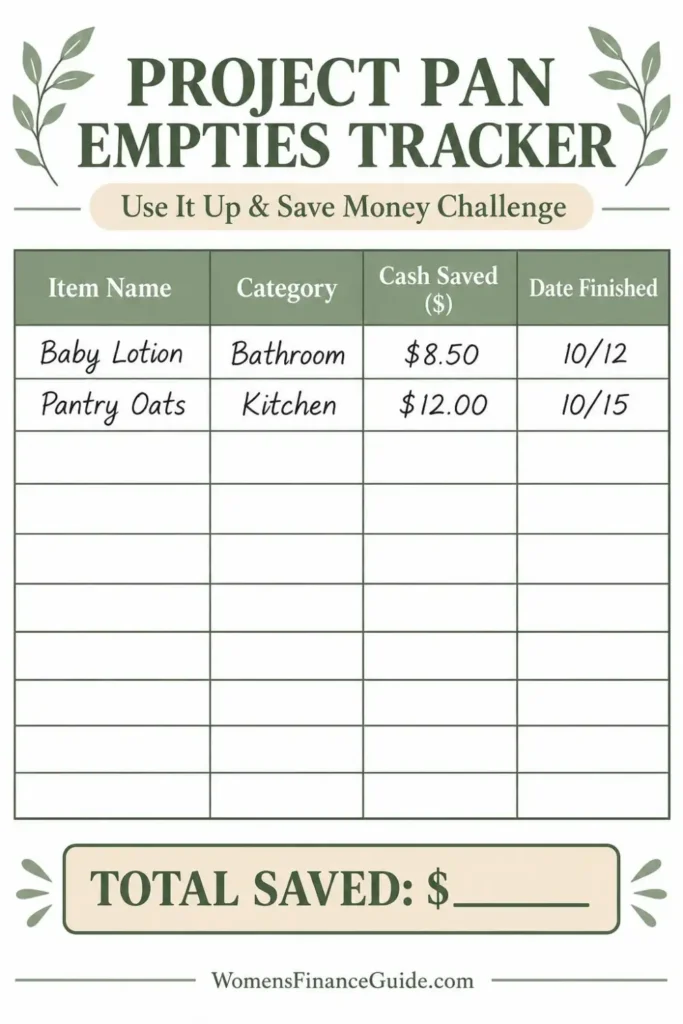
Want an easy way to keep track of every dollar you save? Simply long-press (or right-click) to save the tracker image below to your phone, or print it out and tape it right inside your bathroom cabinet!
More Money Saving Tips for Moms
Want to save even more? These posts will help you keep going:
• What Are Sinking Funds in a Budget? A Beginner’s Guide
• How to Celebrate Christmas on a Budget: A Stress-Free Guide for Moms
• 10 Fun and Free Indoor Toddler Activities at Home (That Cost $0)
• 50 Envelope Savings Challenge: How to Save $1,275 Step by Step
• Frugal Habits of Depression-Era Housewives That Still Save Money Today
• Budgeting for Stay-at-Home Moms: Simple Ways to Save Money
• How to Create a Personal Financial Plan for Women (Step-by-Step Guide)
• Unique Money Saving Ideas for Moms
Written by Sachin Sharma, founder of Womens Finance Guide. Connect with me on LinkedIn. For any questions, feel free to reach out.