When the wind is howling outside, freezing, and your toddler has plenty of energy, finding good indoor toddler activities can feel like a huge challenge without breaking the bank.
“I still fondly remember those rainy childhood afternoons when my mom sat right beside me, patiently teaching me from a simple, colorful alphabet primer book with her own hands. Those memories taught me a vital lesson: you don’t need expensive toys or high-end gadgets to keep a child happy—just a little time, a simple book, and a mother’s love are more than enough.”
The good news is you don’t need to spend a fortune to keep your little one busy today either. A cardboard box, some pillows, clean socks, or a few simple household items can easily create a fun afternoon.
Here are 10 free indoor toddler activities that are easy to set up and can help make a long day at home more enjoyable for both you and your little one.
Why Indoor Toddler Activities Don’t Need to Cost a Fortune
Being a frugal mom does not mean your child has to miss out on fun. Some of the simplest household items can encourage pretend play, movement, creativity, and exploration.
Child development experts always note that play helps toddlers explore and learn about the world.
Many pediatricians recommend simple, safe household items such as cups, pots and pans, books, blocks, and crayons as the most useful options for early childhood play.
That means you do not always need another expensive toy or an online monthly subscription to create a good play experience. A cardboard box can become a house. A few cushions can become an obstacle course. Even a basket of clean socks can turn into a simple sorting game.
The goal is not to keep your toddler entertained every single minute of the day. It is simply to have a few easy, free ideas ready when you need them the most.
10 Frugal & Free Indoor Toddler Activities at Home
1. The Cardboard Castle
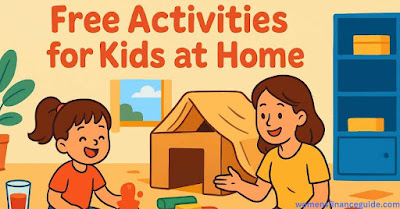
Before you recycle that large cardboard box from your last online delivery, give it another purpose. With adult help, cut out a simple door or window, then let your toddler decorate the box with crayons or other age-appropriate art supplies. The box can instantly become a castle, a house, a car, a shop, or a spaceship. Toddlers have incredible fun deciding what the box is going to become, encouraging pretend play without buying a new toy.
2. DIY Kitchen Band
Grab a few safe kitchen items such as plastic bowls, metal pots, pans, and a wooden spoon, and let your toddler make some music. You can tap along with them and create a simple marching game around the room. It may get noisy, so this is probably better for daytime rather than bedtime. Just make sure the items you give your toddler are safe, sturdy, and appropriate for their age.
3. Masking Tape Runway
If you already have painter’s tape or masking tape at home, use it to create simple roads, circles, parking spaces, or walking paths right on the floor. Your toddler can move toy cars along the lines or walk along the paths. For older toddlers, you can add simple paper signs such as “Stop” or “Parking” to make it more interactive. Before using tape on a floor or carpet, test a small hidden area first to make sure it does not leave residue.
4. Sticky Wall Art
Create a simple temporary art area using painter’s tape and safe, larger pieces of paper. Place the tape so that the paper can be securely attached to a wall or a glass door at your toddler’s height. Then let your toddler add drawings, large paper shapes, or colorful sticky notes. If your toddler still puts objects in their mouth, avoid small pieces such as tiny stickers or small craft items.
5. The Living Room Obstacle Course
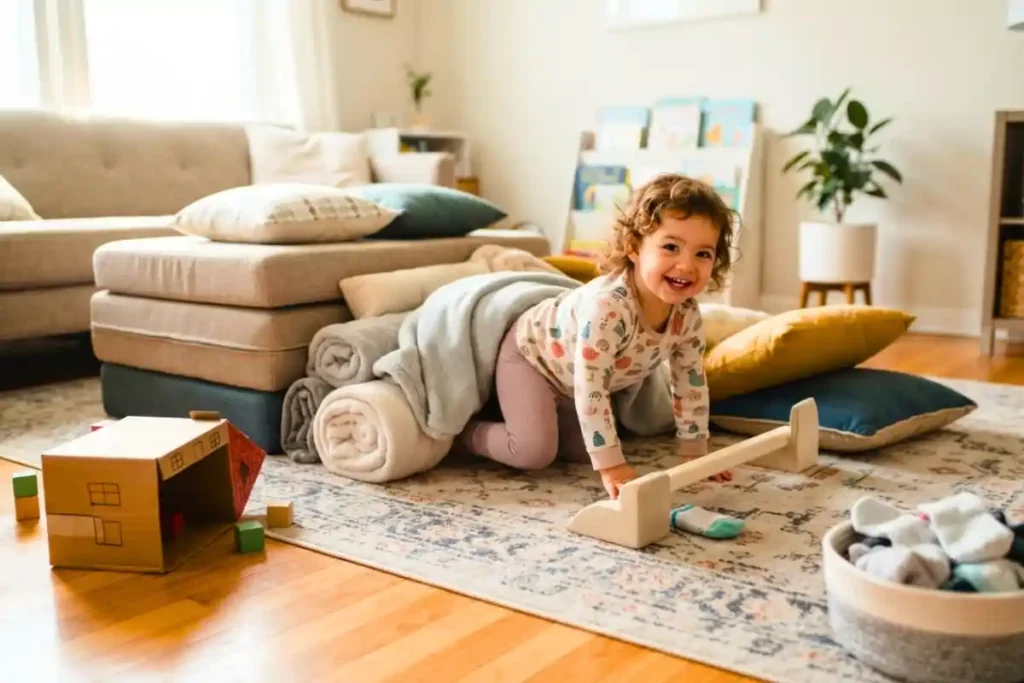
Turn a small part of your living room into an indoor movement course to burn off stubborn energy. Use cushions, pillows, and blankets to create simple areas where your toddler can crawl, step over, walk around, or move between objects. Keep the setup low and simple, and remove anything sharp nearby. You can give fun instructions such as: “Walk around the pillow,” or “Crawl under the blanket.”
6. Indoor Puddle Jumping
You do not need real rain to make a puddle-jumping game. Place a few blue towels or large pieces of blue construction paper on the floor and pretend they are puddles. Your toddler can step or jump from one to another. Keep enough space between the “puddles” for safe movement. You can make the game more fun by pretending that the rest of the floor is covered with imaginary rainwater and cheering whenever they reach the next puddle.
7. Sock Sorting Game
A basket of clean, mismatched socks can become a simple learning game. Put some socks on the floor and ask your toddler to find matching pairs. You can also ask them to sort socks by color or size. For younger toddlers, keep the game simple and focus on matching rather than getting every pair perfect. This activity gives you a small helping hand with laundry while your toddler practices sorting patterns.
8. A Simple Toddler Sensory Activity
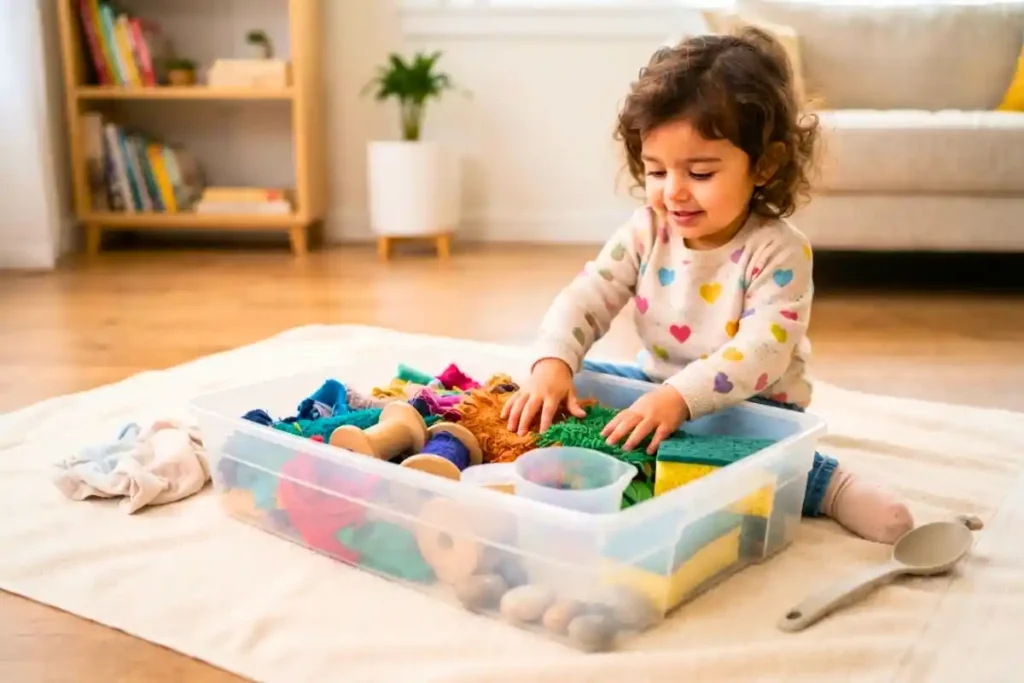
Sensory play is great for brain development, but the materials need to match your child’s age. For toddlers who are past the stage of putting everything in their mouths, you can use a supervised container with dry pasta or oats. However, always remember that loose items can present a choking risk. For a younger toddler who still mouths objects, choose larger, safe items instead and stay close during play. Placing a large towel under the container makes cleanup effortless.
9. The Ice Excavation
This activity is a fun way to introduce water and ice play. Freeze a few large, waterproof plastic toys in a container of water overnight. Once frozen, place the ice block on a deep tray in a safe play area. Give your toddler a cup of comfortably warm water and a spoon, and let them watch the ice melt to free the toys. Avoid using small toys that could become choking hazards once they come loose, and keep the activity supervised.
10. Shadow Puppets Theater
Turn down the lights, use a flashlight, and create simple shadows on a clear wall. You can make animals with your hands or move different objects in front of the light to create interesting shapes. Your toddler can watch, copy your movements, or make up a little story. Keep the flashlight safely in your hands. This is a perfect quiet activity for the end of the day when your toddler needs something calmer before nap time.
A Few Safety Tips Before You Start
Free activities should always be safe, age-appropriate, and supervised. A few simple reminders can make indoor play worry-free:
- Keep small objects, coins, buttons, and tiny loose toy parts away from toddlers who still put things in their mouths.
- Stay close and supervise during activities involving water, ice melting, or physical movement courses.
- Keep floors dry when playing with water or melting ice to avoid any slipping accidents.
- Make sure cushions and temporary furniture structures cannot easily tip over.
- Keep cords, electronic batteries, and cleaning products completely out of your toddler’s reach.
Quick Reference Guide for Busy Moms
| Activity NameMess Level | Materials You May Already Have | Mess Level |
| Cardboard Castle | Cardboard box, crayons | Low |
| DIY Kitchen Band | Pots, pans, wooden spoon | Low |
| Masking Tape Runway | Painter’s tape, toy cars | Low |
| Sticky Wall Art | Painter’s tape, paper | Low |
| Living Room Obstacle Course | Cushions, pillows, blankets | Low |
| Indoor Puddle Jumping | Blue towels or paper | Low |
| Sock Sorting Game | Clean socks | Low |
| Simple Sensory Activity | Large age-appropriate household materials | Medium |
| Ice Excavation | Water, large waterproof toys | Medium |
| Shadow Puppets Theater | Flashlight, clear wall | Low |
FAQs About Entertaining Toddlers Indoors
How can I keep my toddler entertained indoors without screens?
The trick is rotating a few simple activities instead of expecting one activity to last all afternoon. A cardboard box, a movement game, or a simple sock-sorting setup can give your toddler something new to explore without using a screen.
What are the best low-mess toddler activities at home?
Sock sorting, shadow puppets, cardboard-box play, and the indoor puddle-jumping game are your best options when you want zero cleanup. They use items you already have around the house and take just a minute to put away.
How long should an indoor activity last for a 2-year-old?
There is no exact amount of time that every 2-year-old will spend on one activity. Some toddlers may stay interested for several minutes, while others may move on quickly. Having two or three simple setups available makes it easier to change things up when your toddler loses interest.
How can free toddler activities help me save money?
Free activities drastically reduce the need to spend money on frequent paid outings, commercial play centers, or new plastic toys. The idea is simply to have zero-dollar options available for ordinary days so you can keep family life fun without stretching your budget.
More Money Saving Tips for Moms 👇
• 50 Envelope Savings Challenge: How to Save $1,275 Step by Step
• Free Activities for Kids at Home That Cost Nothing
• How to Save 10K This Year with the Simple $27.40 Savings Challenge
• Time Management for Working Mothers: Simple Tips to Save Time and Money
• Procurement Tips for New Moms: How to Buy Baby Essentials Without Overspending
• Frugal Habits of Depression-Era Housewives That Still Save Money Today
• Newborn Baby Shopping List in Budget: Affordable Essentials for First-Time Moms
• Money Saving Tips for Moms: How to Manage Family Finances Smartly
• How to Create a Personal Financial Plan for Women (Step-by-Step Guide)
Some days will feel long, and that is completely okay. Your toddler does not need expensive toys or a paid activity every time they want something to do. Sometimes a simple box, a few cushions, or your own imagination is more than enough to turn an ordinary cold afternoon into something special.
What is your go-to rainy day activity at home? Let me know in the comments below!
Looking for more practical ways to save money as a parent? Explore more budgeting and family finance tips on Womens Finance Guide.
You can also connect with Sachin Sharma on LinkedIn to share your thoughts or ask questions about family budgeting.